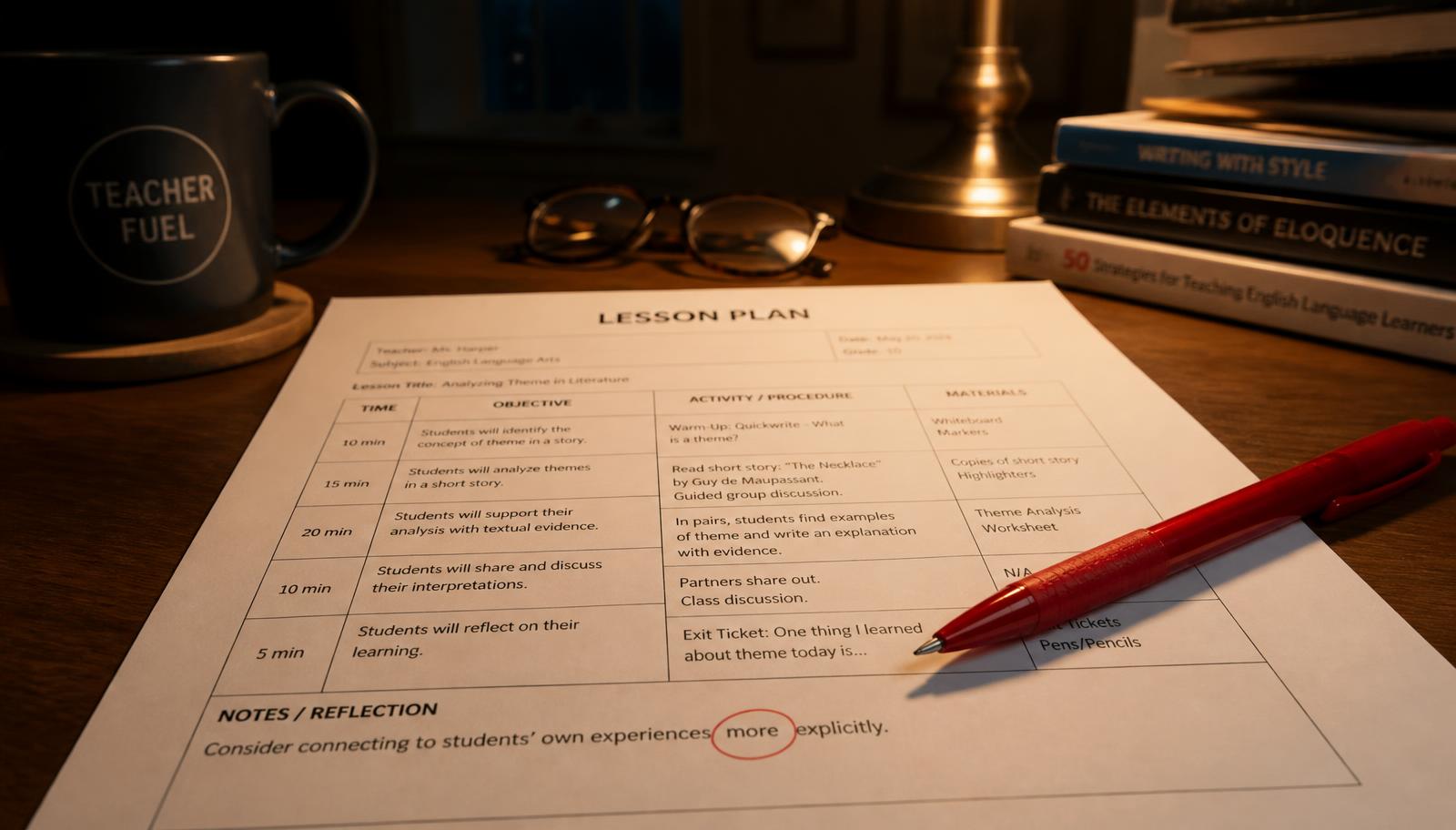

Raw model capability is now a utility anyone can rent. What cannot be commoditised is what a system remembers about this teacher, this room, these children.
The Permanent Substitute
Most artificial intelligence arriving in classrooms today is, structurally, a permanent substitute teacher. Brilliant every morning. Amnesiac every morning. The teacher explains their class, their curriculum, their constraints, the particular quiet of the girl by the window, the way this group needs fractions taught through money and not pizza — and when the session closes, all of it is discarded. Tomorrow the explaining starts again.
This is the single largest reason teachers describe generative tools as more work than relief. They are not being helped by a colleague. They are re-onboarding a stranger, every single day. The stranger is fluent, polite, and eager. But it begins at zero, and it will begin at zero again tomorrow.
A substitute can be sharper than the regular teacher, better read, quicker on their feet. But something is missing that no amount of talent replaces: they do not know that the boy who looks defiant is really just lost and will meet you halfway if you never say his name in anger. They do not know that last week's lesson on photosynthesis needed to be pitched lower, or that this class has stopped raising their hands since March. The knowledge that makes teaching work is slow, specific, and accumulated over time.
Capability Is Becoming a Utility
Almost every education product now rents intelligence from the same small number of frontier labs. The raw capability that felt like a moat two years ago is a commodity input. When everyone can buy the same reasoning, the same summarisation, the same drafting, the differentiating question moves.
It is no longer how clever is the model. It is what does the system hold about this specific teacher that nobody else holds — and what does it do with it next week. Intelligence is becoming cheap and evenly distributed. Memory is not.
This should reshape how we evaluate education AI. A dazzling demo proves nothing about whether the tool will still be useful in February. The question is whether Friday's lesson can build on Monday's. Whether the system knows that the last unit was rushed, that this class needs more scaffolding, that the teacher prefers to introduce concepts through worked examples rather than discovery. The capability that matters is continuity.
Intelligence will keep getting cheaper. Memory of a particular child in a particular room will not.
What Memory Means in Practice
Teaching memory is not a profile form. It is not a preferences page. It is the record of what actually happened and what the teacher actually did about it. It includes the curriculum being taught and the level at which it is being taught. It includes the pitch adjustments made after a lesson landed badly, the pacing that a particular class actually sustains, the misconception that resurfaces every February, the resource a teacher edited because it assumed prior knowledge the class did not have.
It also includes the choices a teacher made. They extended the unit on fractions because the pre-assessment was weaker than expected. They shifted the Victorian novels unit to spring because attendance is more reliable then. They reordered the objectives because the original sequence created a conceptual gap. Each of these is a small decision, but together they form the shape of the course as it actually lives in the room.
A system with memory does not need to be told these things twice. It carries them forward, so that the next worksheet, the next lesson plan, the next assessment can be built on the current reality of the class rather than the generic version of it.
Memory as Architecture, Not Feature
In aime, persistent teaching memory is written from the first artefact a teacher generates — no profile to complete, no configuration step, no onboarding quiz. It records in the background as the teacher works, accumulating the way a teaching partner would. The consequence is compounding: the tenth lesson is better than the first not because the model improved, but because the system finally knows the teacher.
This is how a real teaching partnership behaves. A colleague who has worked with you for a year knows that you hate role-play, that this class responds well to visual organisers, that you prefer to front-load vocabulary before a reading. They do not need a briefing. They carry your accumulated context into every conversation. That is the standard a classroom AI should be held to.
The architecture matters because the underlying models will change. New models will be released, providers will shift, prices will fall. A system whose value is tied to a particular model's capability will lose its advantage the moment a competitor matches it. A system whose value is tied to the accumulated memory of a teacher's practice is far harder to replicate. The memory is not portable; it belongs to the teacher and the system that holds it for them.
The Trust Dividend
Trust in classroom technology is not built by marketing. It is built by the experience of being met where you left off. When a teacher opens a tool and it has already taken into account the last reflection they gave, the last adjustment they made, the last class they taught, the tool stops being an interface and starts being a partner.
That trust is fragile. A single session that forgets the teacher's level, their curriculum, or their preferences can undo months of accumulated goodwill. The experience of being forgotten is not neutral; it is actively annoying. It tells the teacher that their time is not valued, that the system does not know them, that they are once again explaining things to a stranger.
Continuity is therefore an emotional and practical feature. It saves time, but it also saves the cognitive load of recontextualisation. The teacher can think about the next lesson rather than the system. The more the system remembers, the more the teacher's attention returns to the things only they can do.
Who Benefits Most
It is tempting to read memory as a luxury for the already well-served. The opposite holds. The teacher who most needs a partner with continuity is the one carrying six classes, no aide, and no planning period worth the name. They have no time to re-explain their context to a chatbot every morning. They need the system to know them, because there is nobody else in the building with the bandwidth to remember.
For them, a tool that forgets is one more thing demanding re-explanation. It becomes another task. A tool that remembers is the first thing in years that meets them where they left off. It recognises that their time is finite and their context is valuable.
Because that memory is held on infrastructure aime owns and runs — including offline, in classrooms the cloud has never reliably reached — continuity does not depend on connectivity a school may not have. The teacher who loses connection on a Monday morning does not lose the accumulated understanding of their class. The memory is present locally, not locked behind a remote call.
Memory and Equity
There is a global dimension to this. Most of the world's classrooms do not teach in the language AI was built for. A generic system trained primarily on English and on Western curricula will produce plausible, confident resources that are subtly mismatched to local needs. It will generate examples that do not fit, references that do not apply, and assumptions that do not hold.
A system with memory can learn the local curriculum. It can accumulate knowledge of the specific language, the specific sequence, the specific cultural reference points that make teaching effective in that place. It can become a partner that knows the local norms rather than a visitor that imports them. That is the difference between a tool that adapts globally and a tool that belongs locally.
This is why memory is an equity issue. The teachers most likely to be left with generic, amnesiac tools are the teachers in systems with the least budget and the least local language support. A memory-first architecture is one way to build something that improves with use in every context, not just the ones that generated the most training data.
A Test for School Leaders
There is a procurement test that has nothing to do with the demo. Ask the system something on a Monday. Return on Friday and ask something that depends on Monday's answer. If it stares back as though you have never met, the school has bought an expensive substitute: capable, tireless, permanently new to the building.
The test can be applied in other ways. Ask it to generate a lesson for a class, then ask for the next lesson that builds on the same misconceptions. Ask it to remember a teacher's preference for shorter, more focused activities. Ask it to carry forward a curriculum choice made last term. If the system cannot do these things without being re-briefed, it does not have memory. It has capability.
If it remembers, the school has bought something rarer — the thing teaching has always run on. A partner that gets to know the class, and stays. That is the memory advantage, and in the long run it is the only advantage that will matter.
“The teacher's real expertise was always memory of particular children. A tool worth standing beside them should hold it, and hand it back.”
— the aime team