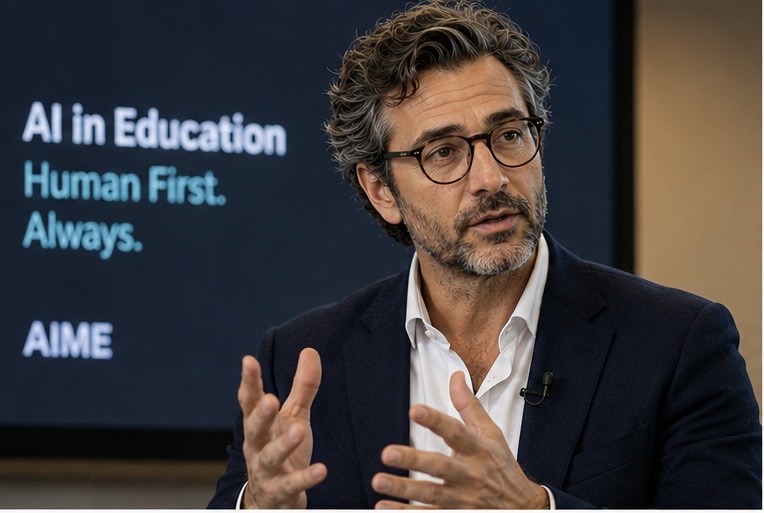


Education systems are investing heavily in technology, curriculum reform and assessment frameworks. Yet the capability crisis facing the teaching profession receives comparatively little attention.
Executive Summary
Around the world, education systems are investing heavily in technology, curriculum reform and assessment frameworks. Yet one of the most significant challenges facing education receives comparatively little attention: the capability crisis affecting the teaching profession.
Teachers today are expected to perform an extraordinary range of responsibilities — educators, curriculum designers, assessment specialists, mentors, counsellors, administrators, data analysts and increasingly technology integrators. At the same time, expectations around student outcomes, reporting and accountability continue to rise.
This paper argues that the future of education depends not on replacing teachers with technology, but on dramatically increasing teacher capability through intelligent support systems. The future belongs not to artificial intelligence alone — it belongs to teachers empowered by intelligence.
The Wrong Conversation
Much of the public discussion surrounding artificial intelligence in education focuses on automation. Can AI write lessons? Can AI generate assessments? Can AI replace certain educational tasks?
These are understandable questions. They are also the wrong questions. The purpose of educational technology should not be to reduce the importance of teachers — it should be to increase the capability of teachers.
Does it make teachers better at teaching?
Teaching Has Become Increasingly Complex
The modern classroom is one of the most demanding professional environments in society. Teachers are expected to plan lessons, create differentiated resources, assess learning, provide feedback, manage behaviour, analyse performance data, support wellbeing, engage parents, implement curriculum changes, integrate technology and meet accountability requirements.
Each responsibility is important. Collectively they create unprecedented complexity. The challenge is not a lack of commitment — it is a lack of support.
Every Teacher Deserves Expert Support
Imagine a world where every teacher had immediate access to curriculum expertise, assessment guidance, pedagogical support, learning science insights, subject specialist knowledge, differentiation strategies, language adaptation assistance and professional coaching. Not occasionally — every day, at the moment support is needed.
This has historically been impossible. Artificial intelligence changes that equation. For the first time, expert guidance can become continuously available. Not to replace professional judgement — to strengthen it.
From Educational Software to Educational Companions
Most educational technology was designed as software. Teachers are expected to learn systems, navigate interfaces, manage platforms, configure workflows.
The next generation of educational technology should be different. Rather than acting as software, it should act as an educational companion — one that understands context, curriculum, learning objectives, student needs, teacher preferences and educational standards. It supports rather than demands. Guides rather than controls. Assists rather than replaces.
A New Vision for the Profession
Imagine a profession where teachers spend less time searching and more time creating. Where teachers receive continuous support rather than occasional training. Where teachers develop expertise faster, feel more confident, feel more capable, and remain at the centre of learning.
This is not a vision of teacher replacement. It is a vision of teacher amplification. The teaching profession deserves nothing less.
“The most important breakthrough in educational AI will not be what it does for machines. It will be what it enables teachers to achieve.”
— Leo Arden, Chief Education AI, aime